

On Monday, Tesla expanded to Fort Worth, their seventh driverless city. The geofence covers 143 square miles at launch, Tesla’s third-largest, behind Austin and Houston. It’s unclear exactly how many vehicles were deployed at launch, but low wait times and infrequent repeat vehicles seemingly indicate a sizable fleet. So far, 19 Model Ys have been confirmed serving riders on Robotaxi Tracker, with the number continuing to grow.
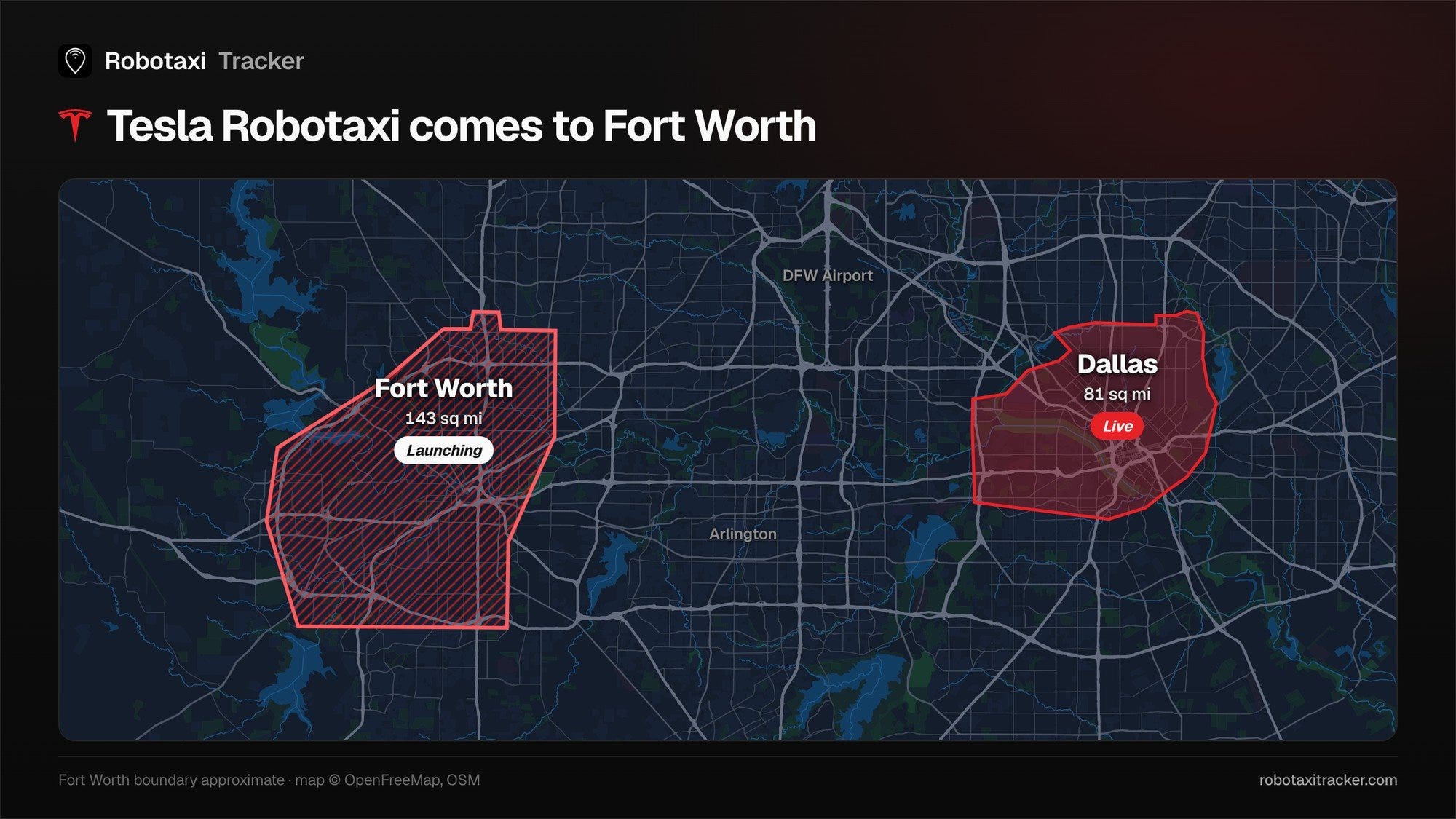
For now, Fort Worth remains disconnected from Tesla’s Dallas service area. However, job postings in areas between the two, like Flower Mound, suggest a merge is likely. For that to be viable, freeways would likely need to be enabled, which is targeted for the end of the year, according to Ashok Elluswamy on Tesla’s latest earnings call.
Waymo Breaks Up With Uber
Earlier this year, the Financial Times reported that Waymo and Uber’s relationship was struggling. Waymo was frustrated with Uber’s lobbying to mandate hybrid networks (which would effectively ban Waymo from operating) and Uber’s management of Waymo’s vehicles, while Uber raised concerns about safety incidents and the partnership’s financials.
This week, we got some confirmation of where things are heading. In an interview with Bloomberg, Waymo co-CEO Tekedra Mawakana publicly acknowledged the subpar experience of booking a Waymo on Uber in Austin and Atlanta, calling it a “crapshoot” for riders.
I can personally attest to Mawakana’s characterization and have been vocal in my criticisms of the current model. Uber’s autonomy roulette (you can’t choose an autonomous vehicle, but you might get assigned one) nearly defeats the whole point of AVs: a consistent, reliable, and safe experience. In addition, the experience itself feels significantly worse, missing features like Spotify and in-app vehicle controls that are available in every other Waymo city.
We now have confirmation that Waymo will serve riders through their own app starting in January 2028 in Austin and Atlanta. Uber will continue offering Waymo rides until the contract ends in May 2028.
Uber has long argued that AV providers will naturally end up on its platform, since its established customer base can provide significantly higher utilization, a core driver of profitability. Waymo’s move casts doubt on that assumption. After comparing early results from the third-party model with running their own app in 13 other cities, Waymo is choosing not to continue the exclusive partnership.
Mawakana specifically highlighted the importance of a direct relationship with riders, something Waymo would lose if it relied on rideshare partners for booking. Waymo appears to be experimenting with other ways to close the utilization gap, through their non-exclusive partnership with Lyft in Nashville (while still offering rides in their own app) and their delivery partnership with DoorDash.
Austin Camera Detections
A more recent addition to Robotaxi Tracker is the camera detection system, currently focused on Austin. The system uses over 600 active, publicly accessible cameras to snapshot and record AV sightings across the city, benchmarking them against total traffic and comparing providers.
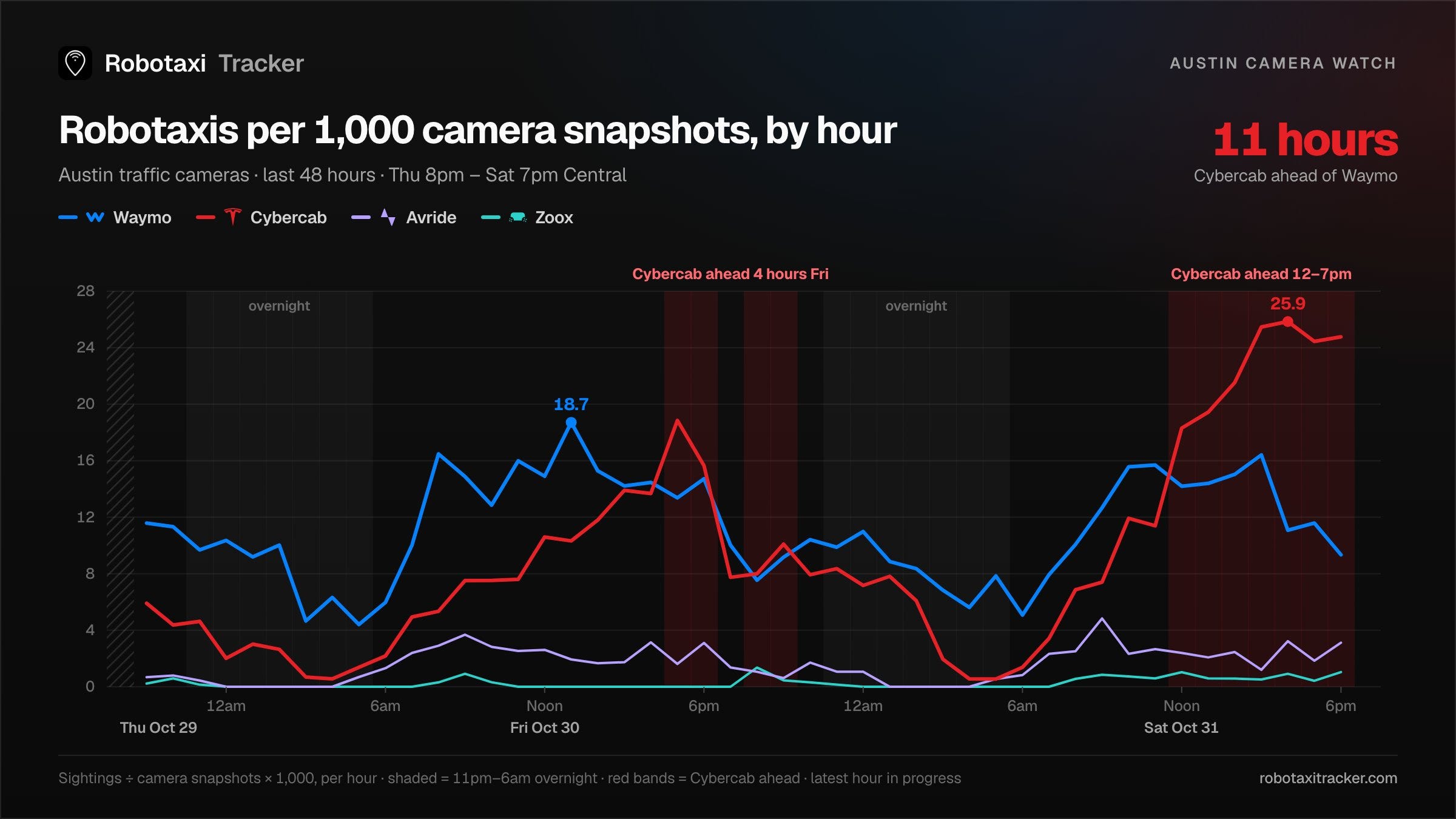
The data is helpful for tracking trends over time, with the intention of offering an on-the-ground metric of how much activity is actually on the road. In addition to week-over-week and daily counts, the hour-by-hour picture gives an interesting look into how AV operators manage their fleets throughout the day. In the snapshot from Halloween weekend above, Tesla’s Cybercab outperformed Waymo in the afternoon but sank overnight during the 2 a.m. to 6 a.m. downtime. Note that the Tesla number only includes Cybercabs, so with the Model Y fleet included, Tesla is significantly ahead of Waymo on weekends.
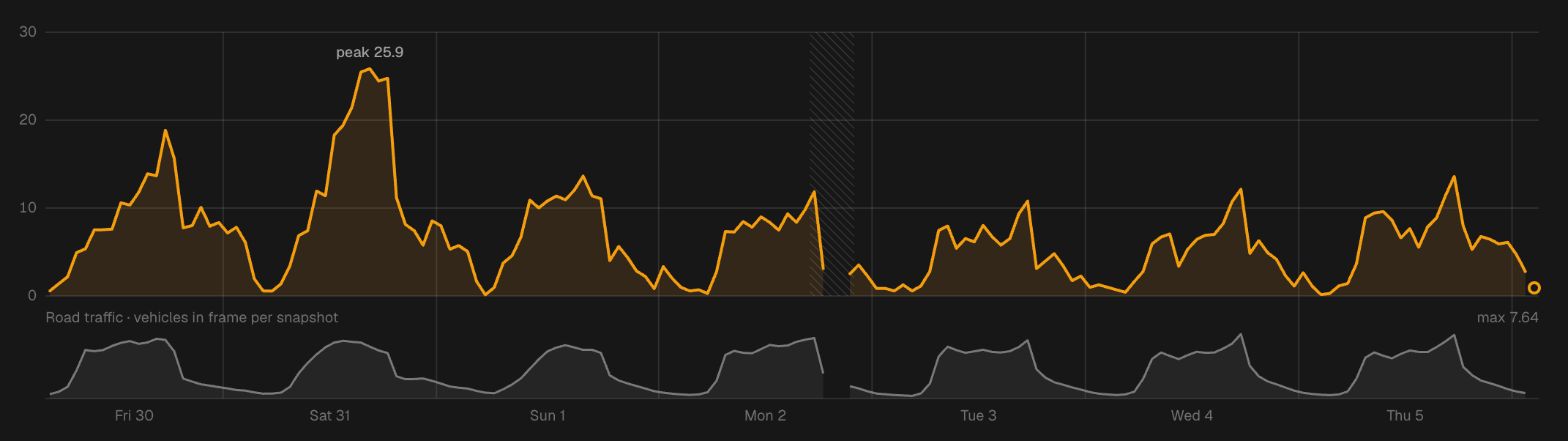
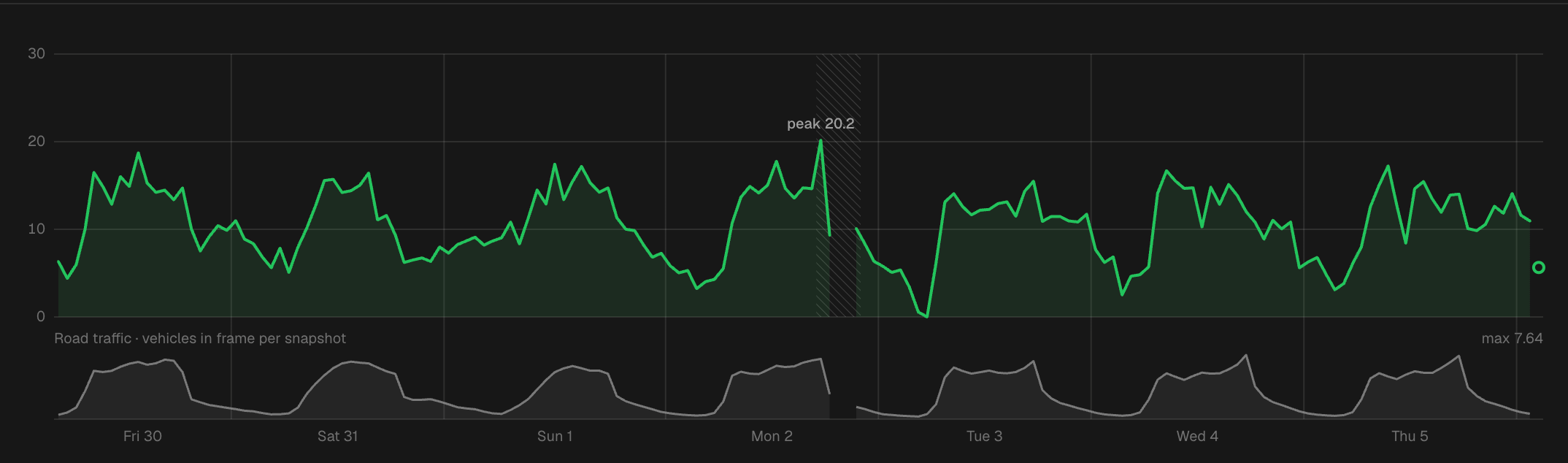
The weekly view shows another interesting trend: Tesla runs significantly more vehicles on weekends, while Waymo’s counts stay more stable.
Other News
Uber reported Q3 earnings, targeting 700 AVs by the end of this year (the large majority Waymo) and 2000+ next year
Toyota will build bZ4X robotaxis in Japan with Waymo’s hardware installed on the factory line
Tesla registered +164 AVs in Texas this week, closing the gap with Waymo to 1,285 (Jaguar I-Pace: 874, Ojai: 411) vs 1,244 (Model Y: 671, Cybercab: 573)
Uber's Q3 10-Q adds the money side of "AV providers will end up on its platform." Its unconsolidated stakes, which it describes as "primarily vehicle fleet operators", carried $1.18B of assets at September 30, with a maximum exposure to loss of $1.26B. That includes a term loan to Moove that grew from $384M at the end of 2025 to $449M. The Q3 release targets about 700 driverless vehicles on Uber by year-end and over 2,000 in 2027. So Uber is already financing the fleets it wants on its network rather than waiting for providers to come, and Waymo leaving Austin and Atlanta makes that bet bigger.
Source: Equibles https://equibles.com/stocks/uber/documents/ae280879-e934-4fc1-836f-d8d8d54d71dd